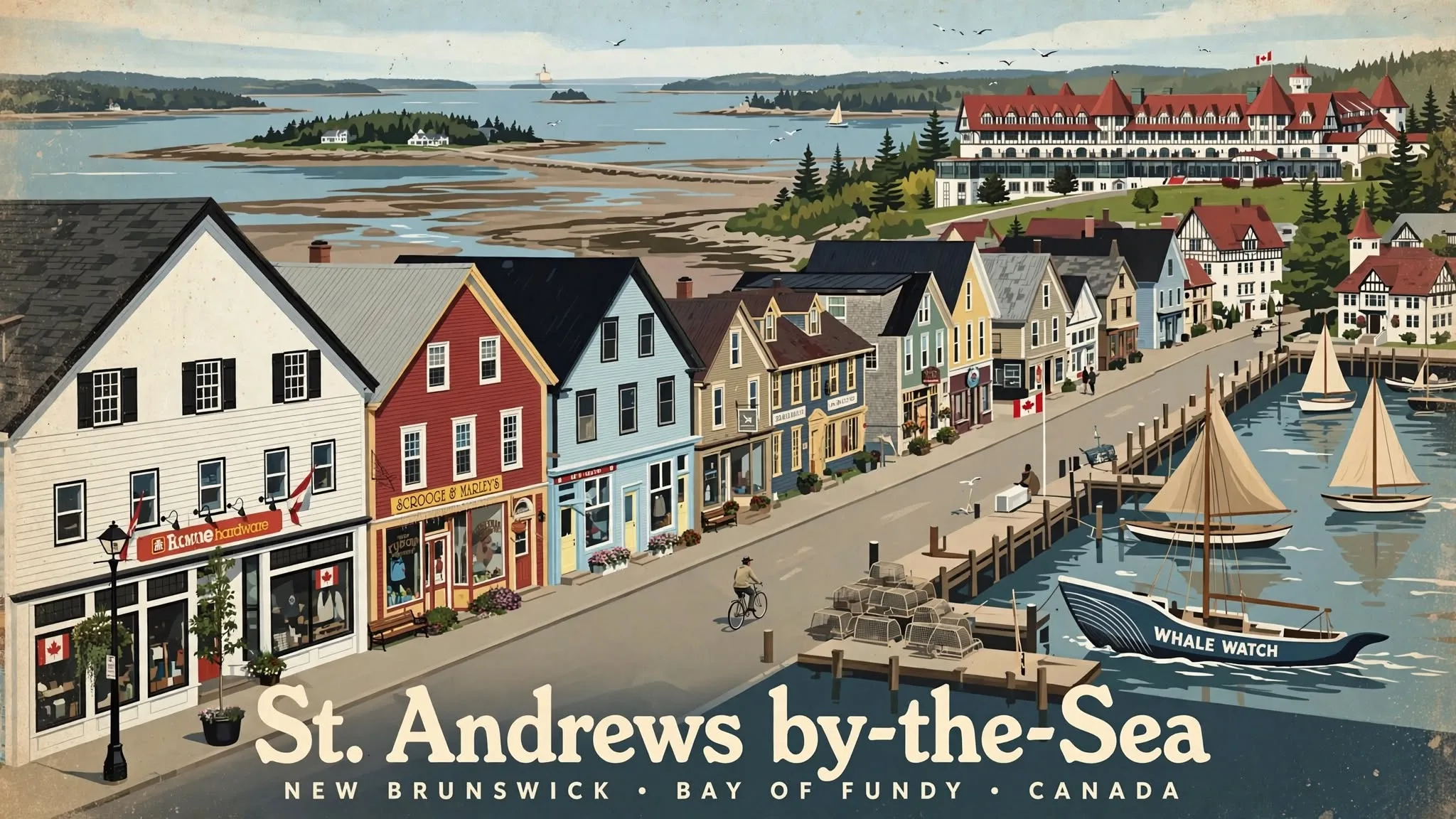
If you have Cajun ancestry from Louisiana, or Acadian roots traced through New England, your family line likely connects to what is now Nova Scotia, New Brunswick, or Prince Edward Island. Under Bill C-3 (effective December 15, 2025), that ancestry can qualify you for Canadian citizenship today, regardless of how many generations back the connection runs.
Acadian claims come with a specific documentation challenge, and in 2026 that challenge became public when IRCC sent surrender letters to Acadian claimants who had already received their citizenship certificates. This guide explains the issue and what documentation actually works.
Does Acadian Ancestry Qualify You for Canadian Citizenship?
Yes. Bill C-3 grants citizenship to anyone born before December 15, 2025, who descends from an ancestor born in territory now part of Canada. Grand Pré, Annapolis Royal, Port Royal, Beaubassin: all of these are in territory that is now Nova Scotia or New Brunswick. An ancestor baptized there in 1720 was born in what is now Canada.
The chain must be documented generation by generation. Each birth and each marriage linking you back to your Acadian ancestor needs a supporting record. Bill C-3 removes the generational limit, but not the documentation requirement.
The 2026 Surrender Letter Problem for Acadian Claimants
In June 2026, IRCC sent letters to roughly 100 people asking them to surrender citizenship certificates that had already been issued. Several were Acadian claimants. In one widely reported case, a Louisiana woman had submitted a copy of her ancestor's 1730 baptismal record from St. Charles-aux-Mines Catholic Church in Grand Pré, NS. Her letter stated that "U.S. documents cannot confirm Canadian citizenship."
Historians called the IRCC position unfair, arguing that the law clearly extends citizenship to descendants of people born in territory now forming part of Canada. The record she submitted documented exactly that: a birth in what is now a Canadian province.
The document's problem appears to have been its source. She had obtained the copy through a U.S.-based genealogical channel. IRCC requires records to come from the institution that created them, or from the recognized Canadian archive that holds the originals, not from copies obtained through foreign intermediaries.
The Key Rule: Canadian Source for Canadian Records
A 300-year-old baptismal record from a Nova Scotia church is a Canadian record. Obtaining it from a genealogy website or a U.S. archive copy is not equivalent to obtaining it from the Centre d'études acadiennes or the Nova Scotia Archives. For a deeper look at what IRCC means by certified, see the certified copy guide.
Where Acadian Records Are Held
Centre d'études acadiennes Anselme-Chiasson, Université de Moncton
The largest single collection of Acadian genealogical material. Holds parish registers, census records, and family files from the 17th century onward. Located at the Bibliothèque Champlain in Moncton, NB. Remote research requests are accepted for a fee.
Provincial Archives of New Brunswick
Civil registration records from the 1800s forward. As of 2026, the archives receive roughly 400 citizenship-related requests per month. Plan for a multi-week wait.
Nova Scotia Archives
Holds vital records and church registers for Nova Scotia, including pre-deportation church records for areas like Grand Pré and Annapolis Royal.
Drouin Collection and PRDH
The Drouin Collection contains parish registers from Quebec and Acadia. The Programme de recherche en démographie historique (PRDH) indexes baptisms, marriages, and burials from the St. Lawrence Valley through 1800. Use these as finding tools, then order certified copies from the originating Canadian archive.
Building a Documented Acadian Chain
A complete Acadian citizenship chain typically includes:
- Pre-deportation ancestor: baptismal or marriage record from a Nova Scotia or NB church archive
- Post-1755 ancestor in Louisiana, New England, or the returned Maritimes: birth or baptismal record from the relevant archive
- Successive generations: birth certificates for each person in the chain
- Marriage certificates connecting each generational link
Where generations were born in Louisiana in the late 1700s, the Louisiana State Archives and Catholic parish archives in New Orleans hold the records. Foreign records are accepted by IRCC, provided they are certified originals or certified copies from the issuing institution.
The strongest Acadian claims also include a post-Confederation anchor: a great-grandparent or great-great-grandparent born in New Brunswick or Nova Scotia after 1867. That person in your chain provides a cleaner citizenship pathway and sidesteps the pre-1755 interpretation questions IRCC raised in 2026.
The Grand Dérangement and Record Gaps
Le Grand Dérangement (1755 to 1764) saw the British expel roughly 11,500 Acadians from Nova Scotia, New Brunswick, and Prince Edward Island. Many families were separated, and civil registration did not exist in the modern sense. Parish registers held by the Catholic Church are the primary records for this era. Most of these have survived in Canadian archives, particularly the Centre d'études acadiennes collection, which includes records from churches across old Acadia.
What Not to Submit
- Printouts from Ancestry.com trees or FamilySearch
- Copies obtained through U.S. genealogical societies
- Documents sourced from any foreign intermediary when a Canadian original exists
If you encounter documents originally created in Canada but now held by a U.S. institution, check whether the Canadian archive also holds the originals. The Centre d'études acadiennes has extensive holdings that parallel many U.S. collection copies.
A Concrete Example: Deep Cajun Roots
Beyoncé is believed to be the sixth great-granddaughter of Joseph Broussard dit Beausoleil, the Acadian leader who guided 193 refugees from Maritime Canada to Louisiana in 1765. Her family surname traces to the Acadian name "Beyincé." The baptismal and marriage records that would document that chain exist in Acadian church archives, not on celebrity genealogy websites.
For any Acadian descendant, the research path follows the same structure: identify the Cajun or Acadian surname, trace the family back through Louisiana or New England parish records, then obtain certified copies of the earliest records from the Centre d'études acadiennes or Nova Scotia Archives. Acadian families kept detailed records, and the genealogical community has indexed them well. The chain is usually traceable; the challenge is getting the documents from the right source.
Next Steps
MaplePass confirms eligibility in about two minutes. If your family carries a surname like Broussard, LeBlanc, Hébert, Thibodeau, Melanson, or Chiasson and you can trace the family back to Louisiana or New England, the chain to Canada is likely there. Check your eligibility before investing weeks in archive requests.