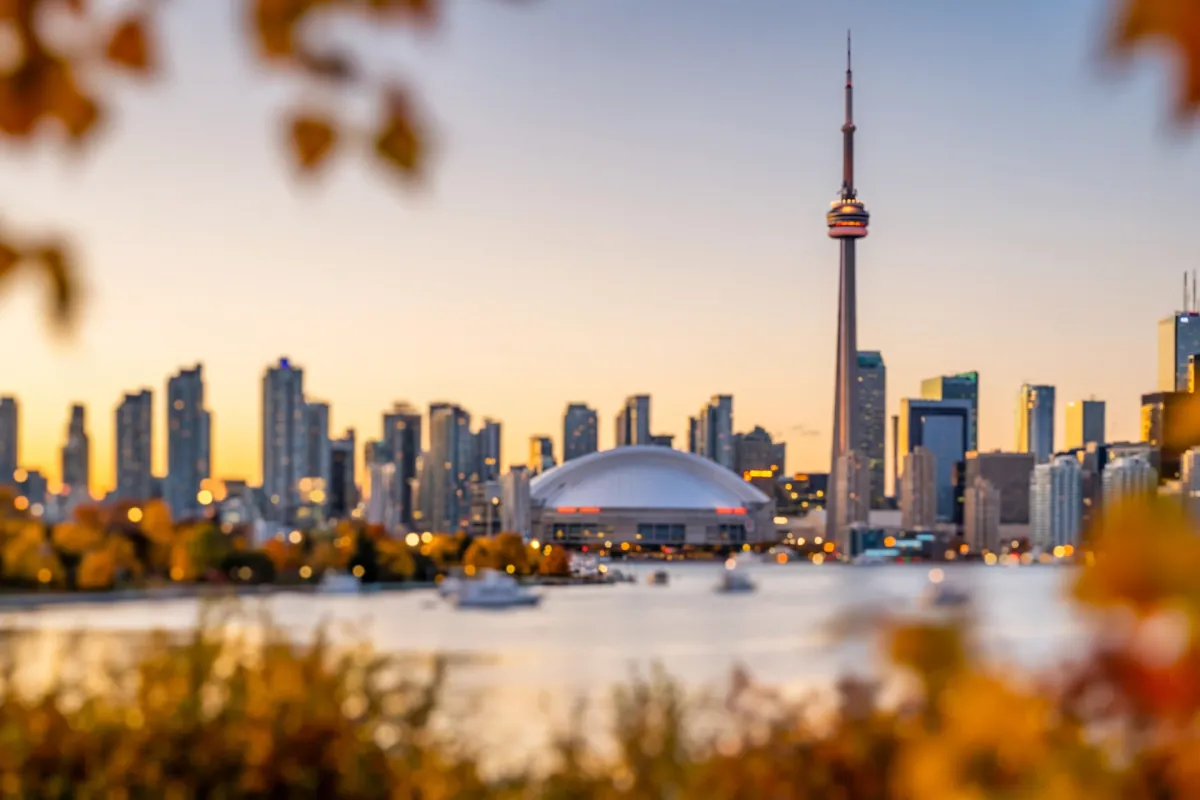
Canada's most populous province is also the starting point for more citizenship-by-descent claims than any other. Ontario, called Upper Canada before 1841 and Canada West until Confederation in 1867, absorbed wave after wave of settlers from the United States, Britain, and Ireland throughout the 18th and 19th centuries. Many of their descendants eventually moved south. Under Bill C-3, effective December 15, 2025, those descendants can apply for Canadian citizenship by descent regardless of how many generations removed they are from the Ontario-born ancestor, provided they were born before December 15, 2025.
Ontario Ancestry and Canadian Citizenship by Descent
If your parent, grandparent, great-grandparent, or any earlier ancestor was born in Ontario (or Upper Canada or Canada West, which are the same territory), and you were born before December 15, 2025, you are almost certainly eligible. Ontario civil registration began July 1, 1869, meaning civil birth certificates exist for ancestors born from that date forward. For ancestors born before 1869, alternative evidence is available and accepted by IRCC.
The path through Ontario ancestry is well-documented and relatively predictable. The documents are in English, the archives are searchable online, and certified copies are available by mail at modest cost.
Who Has Ontario Roots in the United States
Michigan, Ohio, Indiana, Illinois, and upstate New York hold the highest concentrations of Ontario-descended Americans. The reason is geography and economic history. Ontario sits directly across Lake Erie and the Niagara River from western New York and northern Ohio. Windsor, Ontario, faces Detroit across the Detroit River at a distance of less than a mile. When the auto industry and steel mills pulled workers south in the early 20th century, Ontario families followed jobs across borders they had been crossing for generations.
New England states have significant Ontario connections too. Irish and Scottish families who settled in Ontario in the 1840s and 1850s often had relatives who continued south into Massachusetts, Vermont, and Connecticut. For many American families, the Canadian branch simply stopped being noticed when the border hardened.
The Waves That Built Ontario
United Empire Loyalists (1780s to 1790s)
The first major settlement wave came after the American Revolution. Roughly 46,000 settlers loyal to the British Crown arrived in what would become Ontario by 1783, concentrated along the north shore of Lake Ontario from Kingston west to Niagara. These United Empire Loyalists established the foundational English-speaking population of Upper Canada. Their descendants include families throughout New York, Pennsylvania, and New England who retained a connection to Canada across multiple generations without always recognizing it.
The Great Migration and Irish Famine (1815 to 1852)
From 1815 to 1850, the British government actively encouraged emigration to British North America to settle the land and reduce overpopulation at home. Roughly half a million British and Irish settlers arrived in this period. The Irish communities were particularly large. By 1931, 1.23 million Canadians reported Irish descent, and half of them lived in Ontario. These families concentrated in Lanark, Carleton, Peterborough, and Waterloo counties, among others.
The Great Famine (1845 to 1852) pushed a second wave of Irish migration, with roughly 100,000 arriving in 1847 alone. Many settled permanently in Ontario rather than continuing south or returning home.
Scottish settlers came in roughly equal numbers. Heavy Scottish settlement filled Glengarry, Grey, and Bruce counties from the 1820s onward. German and Mennonite communities, many arriving via Pennsylvania rather than directly from Europe, settled Waterloo County from the 1790s, creating communities around Kitchener and Waterloo that retain a distinctive German-Canadian character today.
The Industrial Era (1880 to 1930)
From 1880 to 1930, Ontario cities drew industrial workers from across Europe and from rural communities on both sides of the border. Toronto, Hamilton, London, Windsor, and Ottawa grew rapidly. Many Ontario families in this era had members working seasonally in both Ontario and Michigan or Ohio, before eventually settling on one side or the other. The result is an enormous number of American families with a grandparent or great-grandparent who was born in Ontario and never formally broke the Canadian citizenship chain.
Where Ontario Records Are Held
Ontario has two record systems depending on how old the record is.
Archives of Ontario holds birth registrations older than 100 years on a rolling basis, marriage registrations older than about 80 years, and death registrations older than about 70 years. A certified copy from the Archives is accepted directly by IRCC and costs roughly $15 to $25. You search the index for free on FamilySearch or Ancestry (1869 to 1916), then email your order to archives@ontario.ca with the registration number, name, date of birth, and parents' names. Turnaround is several weeks. The full process is covered in the Ontario birth records before 1920 guide.
ServiceOntario handles more recent records. A long-form birth certificate (which lists parents' names and is what IRCC requires for a descent claim) costs approximately $35 and takes 15 business days online, or about $45 and 5 business days for the rush option. The province-by-province ordering guide covers fees and current processing times in detail.
For ancestors born before July 1, 1869, civil registration did not exist. Church baptismal records, Canadian census records, and township records serve as alternatives. The 1871 and 1881 censuses are fully indexed on FamilySearch and Library and Archives Canada and record birthplace by province.
A Concrete Example
Michael in Toledo, Ohio, knew his family had "come from Canada" but never looked into it. His great-great-grandmother Margaret was born in Waterloo County, Ontario, in 1882, the daughter of German Mennonite settlers. Margaret married an American in 1905 and moved permanently to Ohio. She never formally renounced her Canadian citizenship, and she never knew she had one to renounce.
Michael searched FamilySearch, found Margaret's 1882 Ontario birth registration, and ordered a certified copy from the Archives of Ontario for $20. He assembled the rest of the chain by ordering birth and marriage certificates for each generation between Margaret and himself, four documents in total. His CIT 0001 application went to IRCC with a clear parent-to-child chain stretching from Waterloo County to Toledo.
Where to Start
Search your Ontario ancestor's name in FamilySearch (free) or the Ancestry Ontario birth index (1869 to 1916). Either search will confirm whether a civil registration exists and give you the registration number you need to order a certified copy.
If you are not sure which ancestor in your family tree gives you the strongest claim, MaplePass confirms eligibility in about two minutes and builds the full document checklist for your CIT 0001 application.